Errol Flynn And The Origins Of Rio Grande Rafting
The Rio Grande bamboo rafts of Portland began as working cargo boats moving bananas downriver, and the man credited with turning them into a leisure trip was the Hollywood actor Errol Flynn, whose yacht washed ashore at Port Antonio in 1946.
Short answer
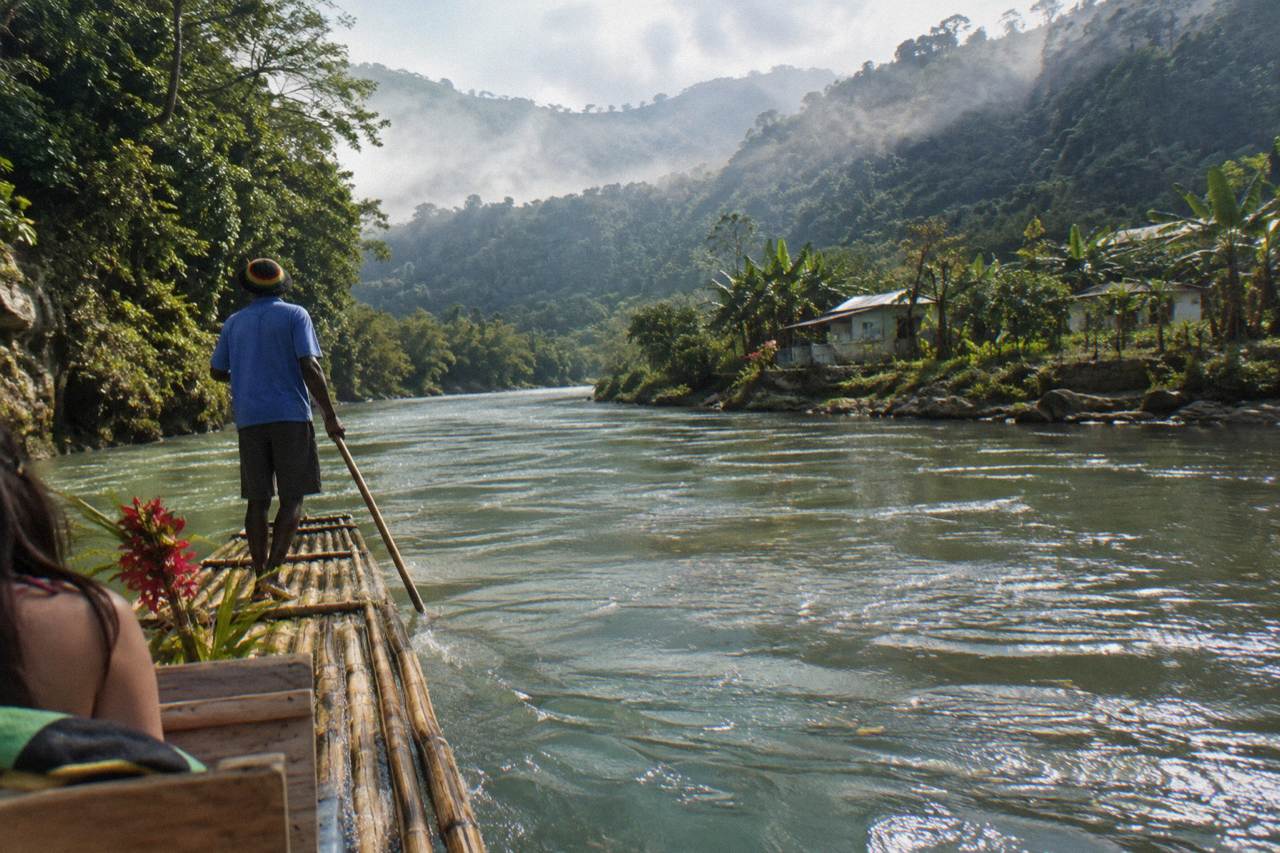
Rio Grande bamboo rafting runs from Berrydale in the Rio Grande Valley to Rafters' Rest at St. Margaret's Bay, about 6 miles, typically 2 to 3 hours on the water with a captain poling the raft. Rafts first moved bananas and produce; Errol Flynn, who reached Port Antonio in 1946, is credited with popularising the ride as leisure.
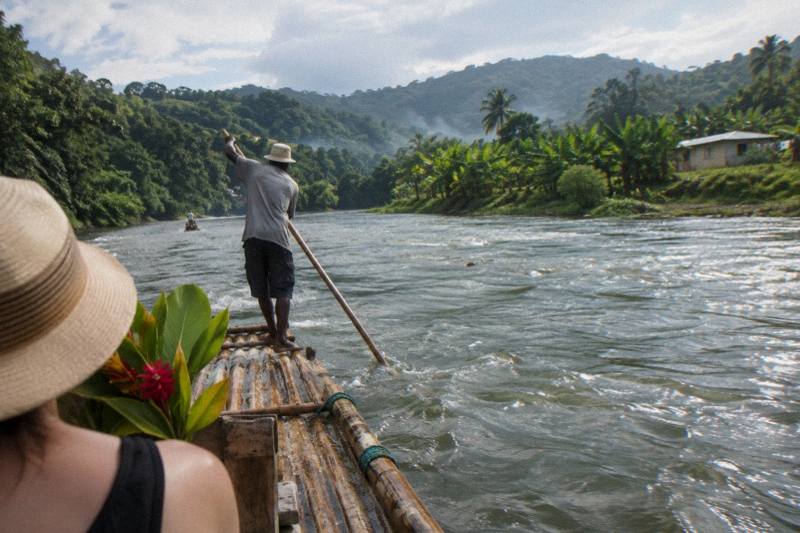
Most people meet the Rio Grande through a photograph: a 30-foot bamboo raft, a standing captain with a long pole, and a slow green river running through the hills of Portland. Few of the visitors who take that ride today know it began as freight transport, or that the man credited with turning it into a pleasure trip was one of the biggest film stars of Hollywood's golden age. The story connects bananas, a shipwrecked yacht and a stretch of river that still carries guests from Berrydale down to Rafters' Rest at St. Margaret's Bay.
This guide walks through that history in order: who Errol Flynn actually was and how he came to Port Antonio, how the banana rafts worked before tourists ever climbed aboard, what the modern trip looks like, and what happened to the river's rafts when Hurricane Melissa tore through Jamaica in October 2025. Along the way it points to the actual bookable trips, including the private Portland raft and jerk chicken tour and the Rio Grande rafting tour from Port Antonio. For the broader river-by-river picture, start with the main bamboo rafting in Jamaica guide.
Who Was Errol Flynn And Why Is He Tied To The Rio Grande?
Errol Flynn was a Hollywood actor, famous for swashbuckling roles in the golden age of the studio system, who arrived at Port Antonio in 1946 when his yacht Zaca washed ashore, and he is credited with popularising bamboo rafting on the Rio Grande as a leisure activity rather than cargo work. The distinction matters. He did not invent the rafts, and no serious account claims he did. The bamboo rafts of the Rio Grande Valley existed for years before him, built to float bananas and produce from the hill farms down toward the coast. What changed after Flynn fell for Portland, bought property there and hosted his famous friends, was the audience. Visitors wanted to try the river the way he showed it off, and a working boat became an attraction.
Flynn's own life was as colourful as his films. Born in Tasmania, he became a global star playing pirates, outlaws and soldiers, then spent his later years chasing adventure off screen. Jamaica gave him both escape and a stage. Port Antonio in Flynn's day was a small, quiet port town, well away from the hotel strips of the north coast, and Flynn treated the whole parish of Portland as his personal playground: sailing, parties at his Navy Island property, and trips up the Rio Grande Valley.
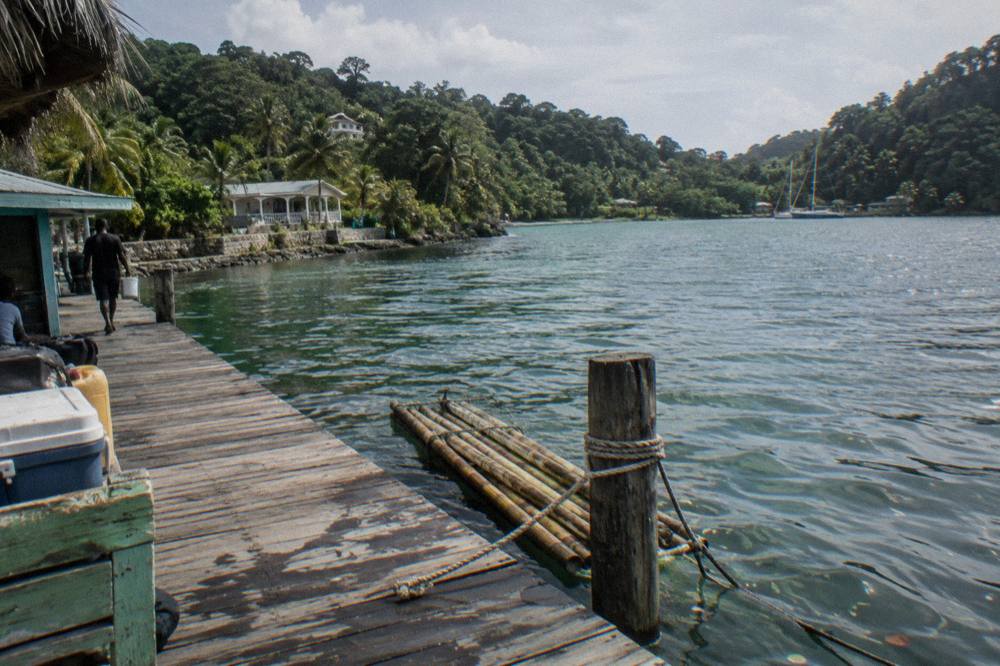
The rafting connection is documented on Portland's own tourism pages, which describe how the rafts once hauled bananas and credit Flynn with popularising the trips for visitors. You can read the account yourself at the Rio Grande rafting page on govisitjamaica.com. The same source gives a practical sense of scale: the standard run starts at Berrydale, deep in the valley, and the drive from Port Antonio out to the rafting points runs roughly 15 to 25 minutes.
A few practical notes for readers whose interest in Flynn is really an interest in taking the trip. The Rio Grande route runs from Berrydale to Rafters' Rest at St. Margaret's Bay, about 6 miles, and a typical trip lasts 2 to 3 hours, a genuinely longer float than the 1 hour 15 minutes the Martha Brae operator quotes for its 3-mile ride. About 80 raft captains work the river, a figure reported by the Jamaica Gleaner. If Portland is your base, the Port Antonio rafting guide covers the practical side of getting on the water.
| Fact | Detail |
|---|---|
| Errol Flynn's arrival | Port Antonio, 1946, when his yacht Zaca washed ashore |
| His role in rafting | Credited with popularising bamboo rafting as leisure, not inventing it |
| Original raft purpose | Moving bananas and produce down the Rio Grande |
| Standard route today | Berrydale to Rafters' Rest at St. Margaret's Bay |
| Route length | About 6 miles (10 km) |
| Typical time on the water | 2 to 3 hours |
How Did Bamboo Rafts On The Rio Grande Get Their Start?
Bamboo rafts on the Rio Grande began as cargo craft: farmers in the valley lashed bamboo poles into wide, flat rafts and floated bananas and other produce downriver to the coast, and the same design, a raised seat at the stern for the captain and a long pushing pole, carries tourists today. It is a working-boat history, not a resort invention. Portland's banana economy in the years before good roads needed a cheap way to move fruit from hill farms to the port at Port Antonio, and the river did the carrying before the highways could.
The design has barely changed. Each raft is built from bamboo, long enough to carry a pole-using captain at the rear and passengers or cargo forward, and stable enough for calm water. The white-water image the word rafting can summon does not apply here. The Rio Grande run is a drift, not a paddle, and the captain does all the work with the pole.
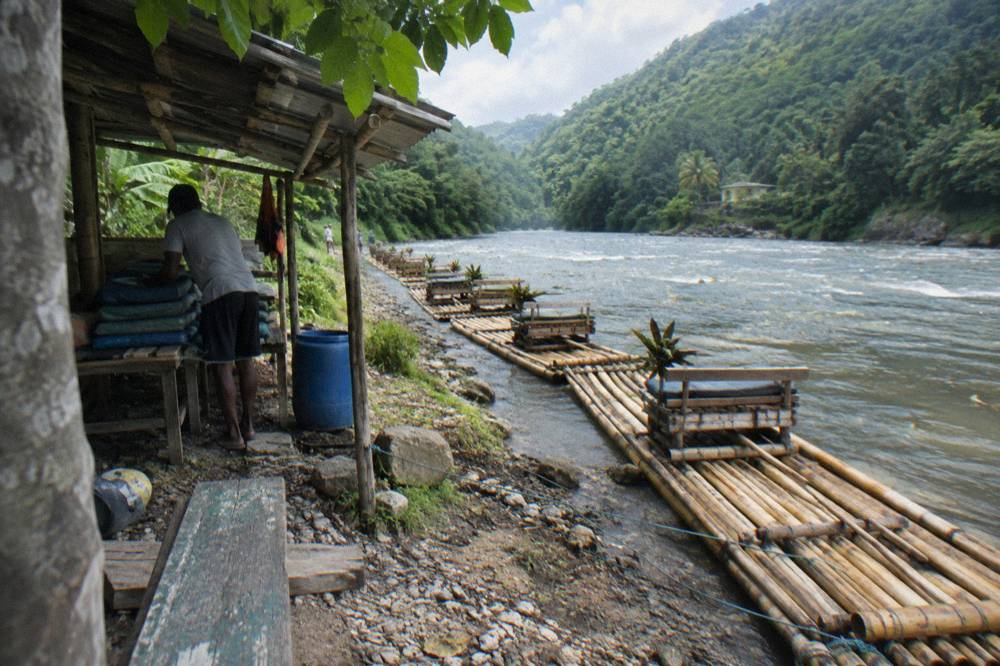
The transition from freight to tourism happened gradually after Flynn's era, as Port Antonio developed a reputation among travellers who wanted the quiet east coast rather than Montego Bay. Rates on the river are set by the Tourism Product Development Company, TPDCo, which raised them in 2023. The Gleaner's reporting on the river notes about 80 captains working the route, which gives a sense of how many livelihoods the trip still supports.
Today two packaged options carry the Rio Grande experience. The Rio Grande Bamboo Rafting Tour from Port Antonio is a private trip from $300 per person, 2 hours 30 minutes total, with lunch, bottled water, a guide and transportation included, and pickup in Port Antonio arranged on the booking page. The Portland raft and jerk chicken tour is a private trip from $220 per person, 4 hours total, departing Kingston or Ocho Rios with the start point agreed with the operator, and it includes the bamboo rafting fees plus a quarter jerk chicken with a side order per guest. One caution on comparing the two: the prices cover different things, so read each listing's inclusions before judging which is the better buy.
For context on how this river stacks up against the Falmouth attraction, the Martha Brae rafting guide covers that operator's history, which dates to the 1970s under the Jamaica Tourist Board, decades after the Rio Grande rafts were already at work.
What Does The Rio Grande Rafting Trip Look Like Today?
A Rio Grande trip today is a private, captain-poled float from Berrydale down about 6 miles to Rafters' Rest at St. Margaret's Bay, typically taking 2 to 3 hours, with one raft carrying 2 adults and 1 small child plus the captain, booked either directly at the river or through packaged tours from Port Antonio and farther afield. The route and the raft design are the same ones the banana trade used. What has changed is everything around it: the road into the valley, the tour packaging and the mix of visitors, many of them now arriving on cruise calls or staying in Portland's small hotels and villas.
The flow of a packaged day is simple. Transport collects you from your agreed point, drives you inland to the launch at Berrydale, and you board a raft with your captain for the float down. The packaged trips add the things a river-side visit does not: from the booking page, the Port Antonio tour includes lunch and a guide, while the jerk chicken tour adds the meal and refreshments on board. Portland rafting was described in Gleaner reporting in late November 2025 as continuing to operate, part of the parish's effort to host visitors while western Jamaica recovered.
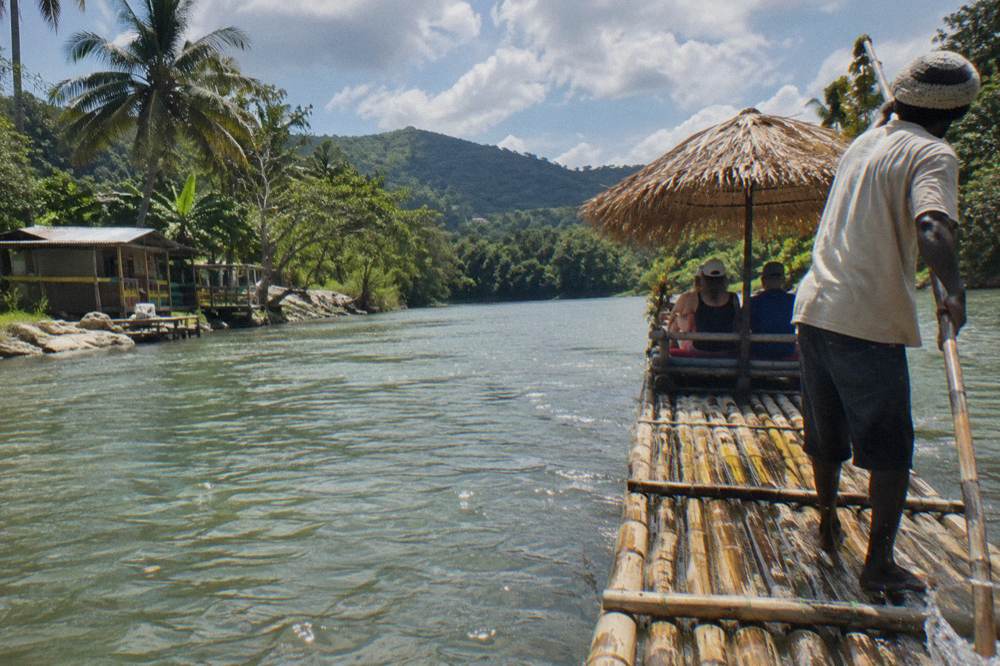
Getting there is the part travellers most often misjudge. Drive times reported by Portland's tourism sources: Port Antonio to Rafters' Rest or Berrydale takes 15 to 25 minutes; Ocho Rios to the Port Antonio area takes 2 to 2.5 hours; Kingston takes 2.5 to 3.5 hours; and Montego Bay takes 4 to 4.5 hours. That last figure is why the Rio Grande is a Portland trip, not an add-on from the Montego Bay hotel strips. If you are based in the west, the Lethe and Great River rafts are the practical option, covered in the Great River rafting guide.
The river-side rate structure is worth understanding before you book anything. TPDCo sets the per-raft rates, and the last change was in 2023, when the long trip rose to J$12,000 per raft and the short trip to J$10,000. Those rates are official but dated, and the packaged tours listed above bundle rafting fees with transport and food at per-person prices, so compare what each actually covers rather than the headline number. The raft itself, per the river's listings, takes 2 adults and 1 small child besides the captain.
| Trip | Price basis | Duration | What the listing includes |
|---|---|---|---|
| Portland raft and jerk chicken tour | From $220 per person | 4 hours | Private transport, rafting fees, quarter jerk chicken with a side per guest, refreshments and snacks on board |
| Rio Grande rafting tour from Port Antonio | From $300 per person | 2 hours 30 minutes | Bottled water, transportation, guide, lunch |
| River-side raft, booked on the spot | Per-raft rates set by TPDCo in 2023 | 2 to 3 hours on the water | The raft and captain only; confirm the current rate when you arrive |
If the history angle is what draws you, there is a Falmouth counterpart worth knowing about: the Martha Brae rafting and Falmouth historical tour, from $145 per person for 4 hours, pairs the Trelawny raft ride with a walk through the Georgian port town, a shared trip with lunch included. It is a different river and a different era of history, but it satisfies the same instinct to see the coast's past and float its rivers in one day.
What Happened To The Rio Grande Rafts During Hurricane Melissa?
Hurricane Melissa made landfall in western Jamaica on 28 October 2025 as a Category 5 storm, and Rio Grande raft captains reported losing well over 100 bamboo rafts when the river overflowed, a blow to roughly 80 captains whose livelihoods depend on the trips, yet Portland rafting was reported still operating by late November 2025. The storm's worst damage fell on the western parishes; Portland caught landslides, flooding and outages in the Rio Grande Valley but escaped the catastrophic hits suffered around Montego Bay and Westmoreland.
The Gleaner's report of 30 October 2025, published under the headline "140 rafts destroyed", recorded the immediate loss on the river and the anger of captains who said they had received no prior assistance from TPDCo after repeated losses in earlier storms. Weeks later, on 22 November 2025, the same paper described Portland attractions, Rio Grande rafting among them, as continuing to operate, with eastern Portland positioned to host visitors while the west rebuilt. You can read the original reporting at the Gleaner's raft loss article.
The port side of the recovery moved quickly. Port Antonio was included in the official reopening sequence by early November 2025, and the Tourism Minister described the area as "hardly touched" by the storm. All four of Jamaica's major cruise ports were receiving ships again by 9 December 2025, with Ocho Rios back on 11 November, Montego Bay's first call in late November and Falmouth's on 2 December. The full port reopening is reported at Seatrade Cruise News.
For a traveller reading this, the honest framing is: the river was hit, the rafts were rebuilt, and operations were reported running through late 2025 and into 2026, but conditions on any given day depend on rain and river levels. Confirm on the booking page before you travel, and check your ship's all-aboard time if you are arriving on a cruise call.
| Event | Reported detail |
|---|---|
| Landfall | Hurricane Melissa, Category 5, western Jamaica, 28 October 2025 |
| Raft losses | Captains reported well over 100 rafts swept away or destroyed |
| Captains affected | About 80 work the Rio Grande route |
| Recovery signal | Portland rafting described as continuing to operate, late November 2025 |
| Port Antonio port | In the reopening sequence by early November 2025; described as "hardly touched" |
Where Does Rio Grande Rafting Start And How Do You Get There?
Rio Grande rafting starts at Berrydale, inland from Port Antonio, and finishes at Rafters' Rest at St. Margaret's Bay, with drive times of 15 to 25 minutes from Port Antonio to the rafting points, 2 to 2.5 hours from Ocho Rios, 2.5 to 3.5 hours from Kingston and 4 to 4.5 hours from Montego Bay. Those numbers, from Portland tourism sources, decide your itinerary. From Port Antonio the trip is a half-day outing; from Montego Bay it is a full-day expedition each way, which is why packaged Portland tours start from Kingston or Ocho Rios rather than the west.
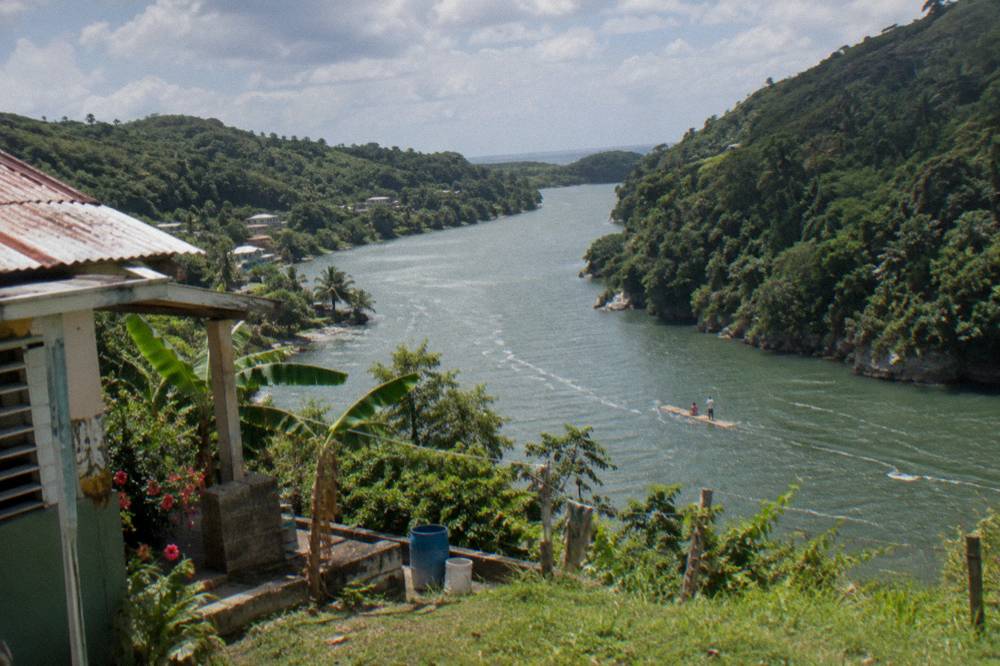
The geography explains the history, too. The Rio Grande Valley is one of the lushest corridors in Jamaica, catching the north-east trade winds and heavy rainfall; Port Antonio's annual rainfall totals are nearly triple Montego Bay's, which is why the valley stays green enough to grow bananas in the first place. The banana economy built the rafts, the rafts outlived the trade, and Flynn gave the outside world a reason to ride them. Flynn's own arrival was nautical: his yacht Zaca came ashore at Port Antonio in 1946.
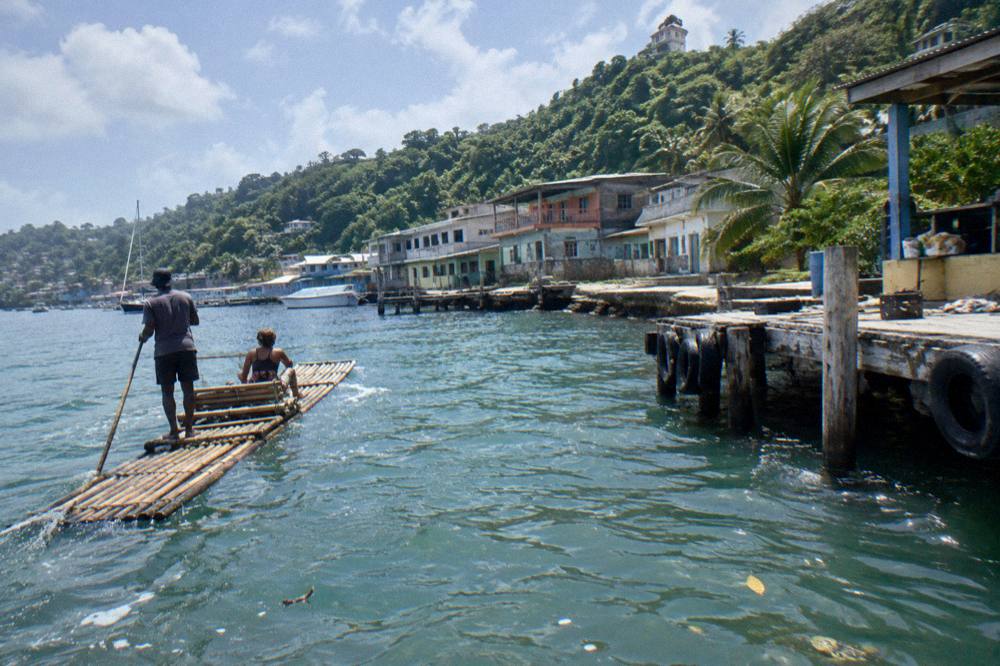

For planning around the rest of Portland, the Port Antonio things to do guide pairs the raft trip with the parish's other draws. And if you are weighing Portland against the more developed rafting scenes, the rivers compared guide sets the four main rivers side by side.
For most visitors the practical choice is a packaged tour rather than a self-drive to Berrydale. The Portland raft and jerk chicken tour arranges pickup with Island Kodesh Tours from a start point in Kingston or Ocho Rios agreed on the listing, which removes the drive-time arithmetic entirely; the Port Antonio rafting tour keeps you close to the river with a 2 hours 30 minutes total and lunch included. Free cancellation is listed on both, so a date can be locked in and moved if your plans shift.
How Does Rio Grande Rafting Compare With Martha Brae?
Rio Grande rafting is the longer, wilder and more historic float: about 6 miles over 2 to 3 hours through a rainforest valley, compared with Martha Brae's 3-mile, 1 hour 15 minutes ride on a 20-mile river near Falmouth, and Rio Grande trips run as private rafts poled by captains working their own route, while Martha Brae is a single-operator attraction dating to the 1970s. Neither is better by default; they serve different itineraries. Martha Brae sits within an hour's drive of Montego Bay, Ocho Rios and the Falmouth cruise port, which is why the packaged trips there are built around bus transfers, while the Rio Grande belongs to travellers already committed to Portland or the east coast.
The history gap is the real difference. Martha Brae's attraction began in the 1970s under the Jamaica Tourist Board and has been run by River Raft Limited since 1985, with local legend tying the river to a woman named Martha Brae and hidden Spanish-era gold. The Rio Grande rafts are older as a working tradition, carrying produce before Flynn ever saw them. You can trace the Falmouth side further at the Martha Brae operator's own history page.
The head-to-head comparison of the two rivers, including prices and pickup coverage from every departure point, is laid out in the Martha Brae versus Rio Grande guide. On capacity: one Rio Grande raft takes 2 adults and 1 small child plus the captain, and Martha Brae's raft carries 2 adults and a small child aged 3 to 9 with padded seats, with no weight limit stated, though a person wider than the raft may find it uncomfortable. For anything beyond that, check the listing or ask the operator.
The Legacy In One Sentence
Flynn's legacy on the Rio Grande is that a banana freight route became one of Jamaica's signature experiences, and about 80 captains still pole guests down the same 6 miles from Berrydale to Rafters' Rest, a living link between Portland's agricultural past and its tourism present that survived even the loss of more than 100 rafts in Hurricane Melissa. That continuity is the reason this river rewards a slower read than the others. The Martha Brae attraction was built for visitors; the Rio Grande was built for fruit and adapted for them.
Practically, three decisions frame any Rio Grande trip. First, base yourself in or near Port Antonio, or accept the long drive from Kingston or Ocho Rios. Second, decide whether you want the bare float or a package, keeping in mind that per-person prices cover different bundles of transport, food and fees. Third, book with a licensed operator and confirm on the live listing, since river conditions, pickup points and schedules are confirmed at booking rather than fixed in advance.
Common Questions About Rio Grande Rafting History
Who Was Errol Flynn And Why Is He Tied To The Rio Grande?
Errol Flynn was a Hollywood star who arrived at Port Antonio in 1946 when his yacht Zaca washed ashore. He stayed, bought property in Portland, and is credited with popularising bamboo rafting on the Rio Grande as a leisure activity. He did not invent the rafts; they existed first as cargo craft moving bananas and produce.
How Long Is The Rio Grande Rafting Trip?
The standard route runs from Berrydale in the Rio Grande Valley to Rafters' Rest at St. Margaret's Bay, about 6 miles, and typically takes 2 to 3 hours on the water. Packaged tours list their own total durations, including transport: the Port Antonio tour runs 2 hours 30 minutes total and the Portland raft and jerk chicken tour runs 4 hours.
What Did Bamboo Rafts Carry Before Tourists?
Bamboo rafts on the Rio Grande originally moved bananas and other produce from hill farms in the valley down toward the coast at Port Antonio. The raft design, a flat bamboo platform with a captain poling from the stern, is essentially the same one that carries guests today.
Did Hurricane Melissa Destroy The Rio Grande Rafts?
Hurricane Melissa made landfall as a Category 5 storm on 28 October 2025, and raft captains reported losing well over 100 bamboo rafts when the river overflowed, a blow to the roughly 80 captains working the route. Rafting was reported continuing to operate by late November 2025, but confirm current conditions on the booking page before you travel.
How Far Is Rio Grande Rafting From Port Antonio?
The rafting launch at Berrydale is inland from Port Antonio, and the drive from Port Antonio out to the rafting points and Rafters' Rest runs roughly 15 to 25 minutes. From farther afield, expect 2 to 2.5 hours from Ocho Rios, 2.5 to 3.5 hours from Kingston and 4 to 4.5 hours from Montego Bay.
Is Rio Grande Rafting The Same As Martha Brae Rafting?
No. Rio Grande rafting is a longer float, about 6 miles over 2 to 3 hours, on a rainforest river in Portland with private rafts poled by individual captains. Martha Brae is a single-operator attraction near Falmouth dating to the 1970s, covering 3 miles of a 20-mile river in 1 hour 15 minutes, and its packaged tours are built around shared bus transfers from the Montego Bay resorts.